
Air Quality
The Causes and Consequences of Particle Pollution in Ghana
Particle pollution from vehicle emissions, biomass burning, dust and industrial activity affects air quality and public health across Ghana.
By Alliance for Environmental Intervention ·
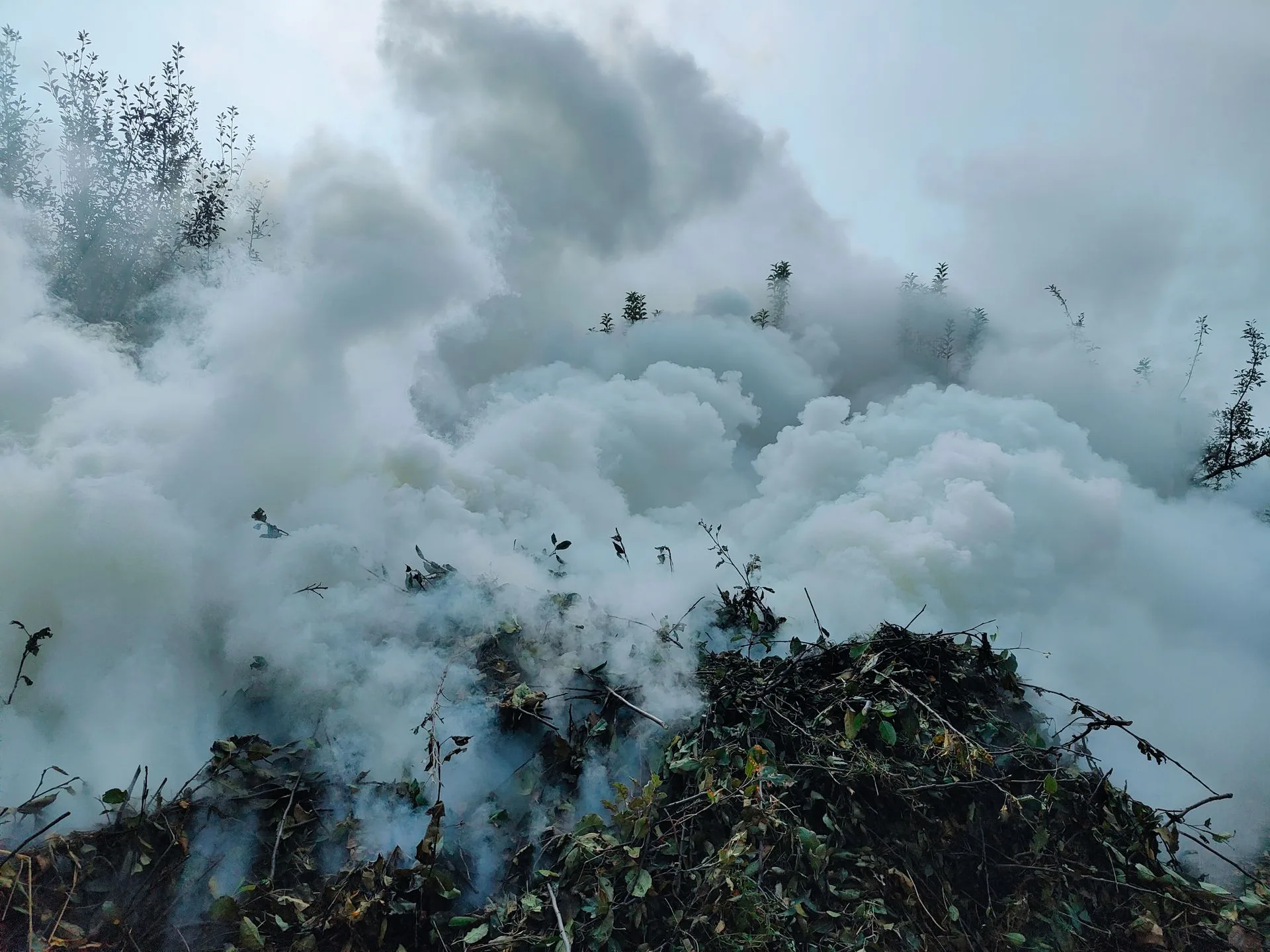
Photo by Munazir Bhat, Pexels.
Illustrative photograph. The image does not depict a documented pollution event in Ghana.
Particle pollution, commonly measured as PM₁₀ and PM₂.₅, is a significant air quality concern in Ghana. These particles are small enough to be inhaled and, in the case of PM₂.₅, can penetrate deep into the lungs and bloodstream [1].
What is particle pollution
PM₁₀ refers to particulate matter with a diameter of 10 micrometres or less, while PM₂.₅ refers to the finer fraction with a diameter of 2.5 micrometres or less. Both are associated with adverse health effects, with PM₂.₅ generally considered more harmful because of how deeply it can penetrate the respiratory system [1].
Causes of particle pollution in Ghana
Vehicle emissions
Ghana’s growing vehicle fleet, including a large number of older and poorly maintained vehicles, contributes to particle pollution in urban centres such as Accra and Kumasi. Traffic congestion compounds this by increasing the time vehicles spend idling and emitting pollutants.
Biomass burning
The burning of wood, charcoal and agricultural residues for cooking and other domestic purposes is a major source of particulate emissions in many Ghanaian households, particularly in areas with limited access to cleaner cooking fuels. Bush burning and open waste burning contribute further to particulate loads at certain times of the year.
Dust
Unpaved roads, construction activity and dry-season conditions contribute to elevated dust levels in many parts of the country. The Harmattan season, when dry, dust-laden winds move across the region, is associated with markedly elevated particulate concentrations.
Industrial and mining activity
Industrial processes and mining activity, including small-scale and artisanal mining, can release particulate matter into the air. Research examining the environmental and social effects of mining in Ghana, including work by Akabzaa and Darimani, has considered how mining-related activities affect surrounding environments, while research by Rashidatu Sulemana has examined dimensions of environmental and health impacts associated with mining communities in Ghana.
Consequences of particle pollution
Respiratory and cardiovascular health
Exposure to elevated particle pollution is associated with respiratory conditions, including asthma and reduced lung function, as well as cardiovascular effects. Children, older people and people with pre-existing respiratory or cardiovascular conditions are generally more vulnerable to these effects [1].
Household air pollution
Indoor exposure to smoke from biomass cooking fuels is a particular concern in households that rely on open fires or basic stoves in poorly ventilated spaces, where occupants, especially those who cook, can experience sustained exposure to elevated particulate concentrations.
Environmental effects
Particle pollution can also affect visibility, contribute to the soiling of buildings and vegetation and interact with other pollutants in the atmosphere.
Addressing particle pollution
Reducing particle pollution in Ghana involves a combination of approaches, including cleaner cooking technologies, improved vehicle standards and maintenance, dust management on construction and mining sites, and continued monitoring of air quality in urban and peri-urban areas.
Sustained attention to these sources is important for protecting public health, particularly for the most vulnerable members of affected communities.
- Air Quality
- Public Health
- Pollution
- Ghana
- Mining
- Urban Environment
References
- World Health Organization, "Ambient (outdoor) air pollution," 2022. https://www.who.int/news-room/fact-sheets/detail/ambient-(outdoor)-air-quality-and-health
Findings attributed to Rashidatu Sulemana and to Akabzaa and Darimani are referred to in general terms because complete bibliographic details for these studies were not available at the time of writing.