
Biodiversity
Ghana River Frog
The Ghana River Frog is a Near Threatened amphibian associated with fragmented forest habitats in Ghana and Côte d’Ivoire. Habitat degradation, mining and infrastructure development place continuing pressure on the species.
By Alliance for Environmental Intervention ·
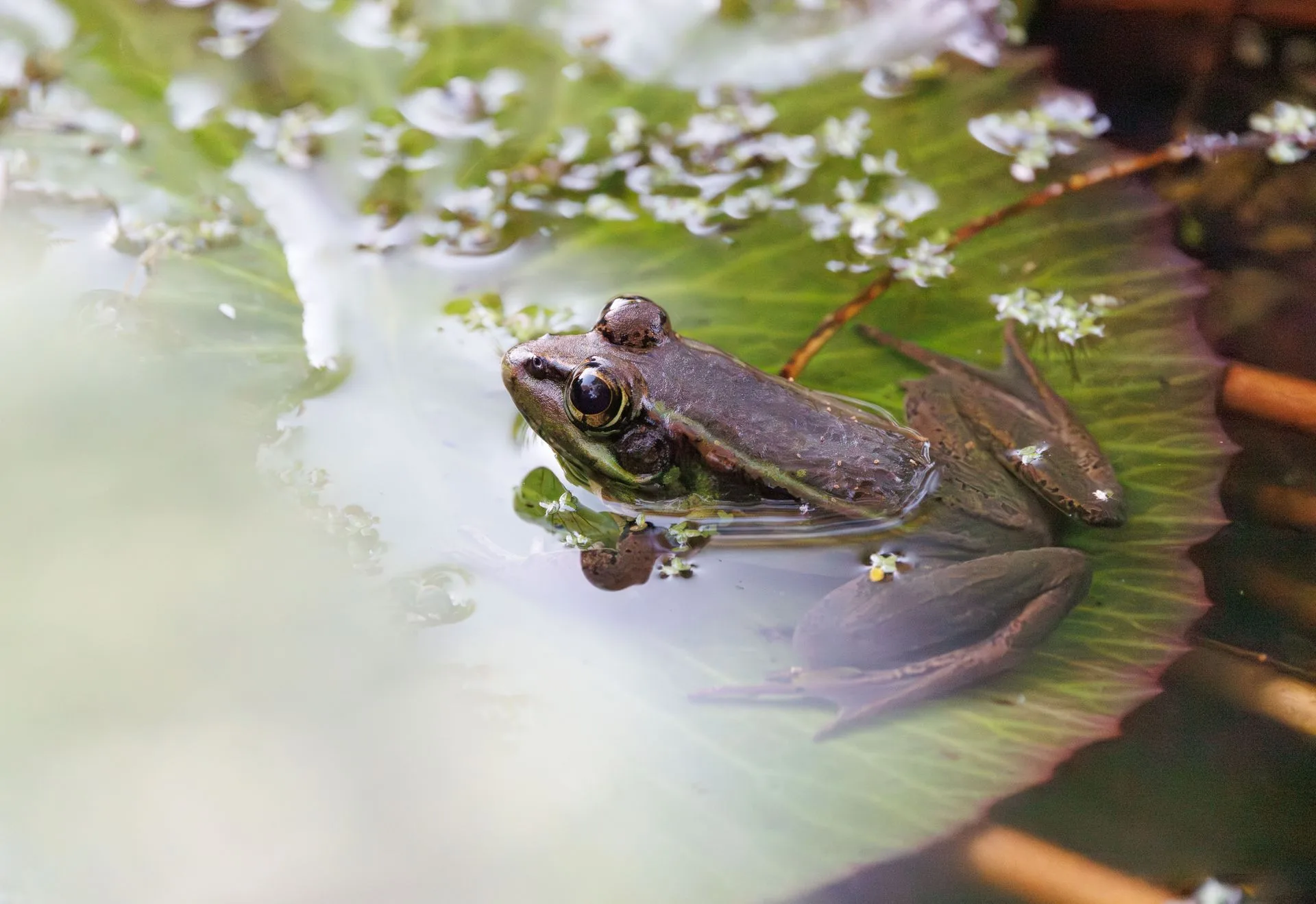
Photo by Veronika Andrews, Pexels.
Illustrative photograph. The frog shown has not been identified as Phrynobatrachus ghanensis.
The Ghana River Frog, Phrynobatrachus ghanensis, is a small forest amphibian found in the fragmented forest region of south-western Ghana and south-eastern Côte d’Ivoire.
The species is classified as Near Threatened on the IUCN Red List because of its restricted area of occupancy and the continuing decline in the extent and quality of its habitat.
Taxonomy
- Kingdom
- Animalia
- Phylum
- Chordata
- Class
- Amphibia
- Order
- Anura
- Family
- Phrynobatrachidae
- Genus
- Phrynobatrachus
- Species
- Phrynobatrachus ghanensis
Distribution
The species is associated with the heavily fragmented forest region of south-western Ghana and south-eastern Côte d’Ivoire.
Documented locations in Ghana include:
- Kakum National Park
- Boi-Tano Forest Reserve
- Bobiri Forest Reserve
- Atewa Forest Reserve
- Draw River Forest Reserve
- Ankasa Conservation Area
Habitat and ecology
The Ghana River Frog is an inconspicuous forest-floor species associated with swampy primary rainforest. It has also been recorded near temporary pools in bamboo forest and close to forest edges.
Reproduction involves larval development in small pools or puddles within leaf litter near swamp margins.
Because the species is inconspicuous and relatively few specimens have been documented, it may be overlooked during field surveys.
Threats
The species is affected by the continuing loss and degradation of forest habitat.
In Ghana, mining and associated infrastructure, including road construction, place pressure on forest habitats such as the Atewa landscape.
Conservation
Several documented locations are within national parks, forest reserves or conservation areas. Protected-area designation contributes to habitat protection, although effective management and the reduction of external pressures remain important.
- Amphibians
- Biodiversity
- Forest Conservation
- Habitat Loss
- Protected Areas
- Ghana
References
- IUCN SSC Amphibian Specialist Group. 2019. "Phrynobatrachus ghanensis." The IUCN Red List of Threatened Species 2019: e.T58112A16928618. https://www.iucnredlist.org/species/58112/16928618
Conservation assessments may change as new information becomes available. Readers should consult the IUCN Red List for the latest assessment.